
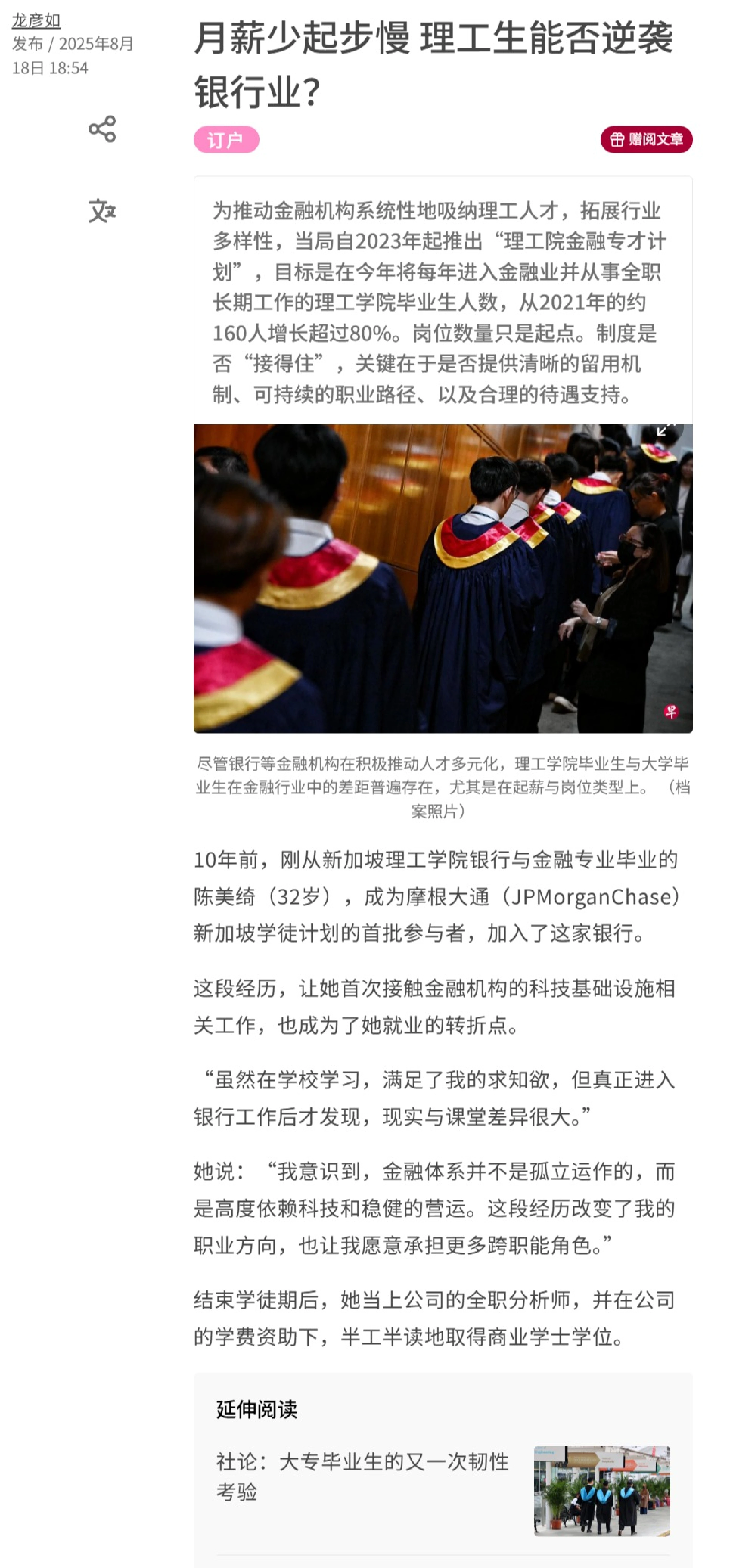
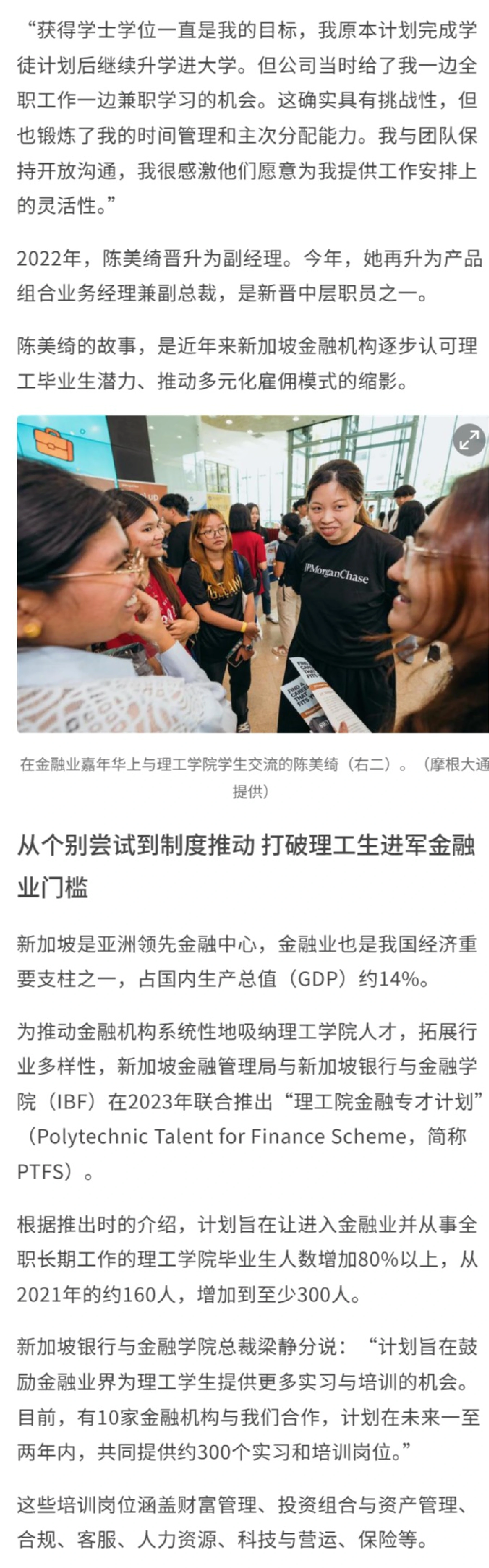
Polytechnic graduates are finding more pathways into banking despite starting with lower salaries than their university peers. One example is Chen Meiqi, an SP Banking & Finance alumna who joined JPMorgan Chase’s Singapore apprenticeship programme a decade ago. The experience exposed her to the bank’s technology infrastructure and set her on a new career path; she later became a full-time analyst and, with the company’s support, earned a business degree while working. To expand such opportunities, the Monetary Authority of Singapore and the Institute of Banking and Finance launched the Polytechnic Talent for Finance Scheme (PTFS) in 2023. The scheme aims to increase the number of polytechnic graduates in full-time financial sector roles from about 160 in 2021 to at least 300. However, salary differences remain. Ministry of Education data from November 2024 showed that business graduates from NUS and NTU had median starting pay between S$4,300 and S$5,000, while a joint report from the five polytechnics in January 2024 found their business graduates earned a much lower median of S$2,700. To bridge this gap and diversify recruitment, polytechnics are working with banks, insurers and the Institute of Banking and Finance. At NP’s Financial Industry Career Fair in July, 10 major institutions, including Singapore’s three local banks, JPMorgan Chase and Prudential, announced new collaborations.
.webp?sfvrsn=85f690c0_1)

Singapore Polytechnic
500 Dover Rd Singapore 139651