Overview
-
Course Date:
28 Dec 2026 to 30 Dec 2026
-
Registration Period:
28 Oct 2026 to 7 Dec 2026
-
Duration/Frequency:
24 hrs / Mon - Wed (8.30am to 5.30 pm)
-
Mode of Training:
Classroom
Note: Participants must be 16 years old and above, with a height of between 1.62m - 1.90m. Participants should not have pre-existing conditions like pregnancy, heart issues, extreme hypertension for Motion Simulator Training safety concerns.
What You Will Learn
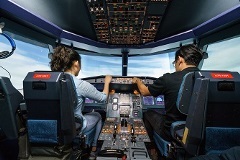
The course aims to deepen participants' understanding of Aviation principles and advanced flight simulation techniques, enhancing their skills in Aircraft handling, navigation, and decision-making. It prepares participants for more challenging Aviation scenarios, including emergency procedures and multi-crew cooperation, by providing hands-on experience in a full motion A320 Simulator. Additionally, the course offers a more tailored training that will deepen their existing skills and knowledge, so that they can proceed to more advanced Aircrafts and technology. It also aligns with the participants’ level of expertise and expectations as experienced Pilots with existing Commercial Pilot licences.
Participants will get an immersive experience in advanced aircraft piloting and simulation. Through a combination of classroom instruction, hands-on simulation training, and subject discussion with experienced pilots, participants will deepen their understanding and proficiency in aviation.
By the end of the course, participants will be able to:- Execute advanced flight manoeuvres and procedures in a simulated Aviation environment
- Apply cockpit resource management techniques to effectively coordinate with other crew members
- Manage and operate modern glass cockpit systems, including flight director management
- Assess and mitigate foul weather risks to ensure safe flight operations
- Demonstrate procedures in handling basic in-flight emergencies with confidence and composure
- Discuss about decisions, made or experienced in dynamic and challenging flight scenarios
Topics to be covered- Roles and Responsibilities of Basic Crew (PF/ PM)
- Human Interface with Glass Cockpit Principles
- Risk Minimisation in line with Instrument Landing System
- Introduction to Flight Director Flying and Management
- Basic Emergency Handling
- Radiotelephony Procedures
- Flight Training using Full Motion Simulator