This theme highlights the use of cutting-edge digital tools and technologies; these projects demonstrate how digital solutions can enhance efficiency, connectivity, and user experiences across various sectors.
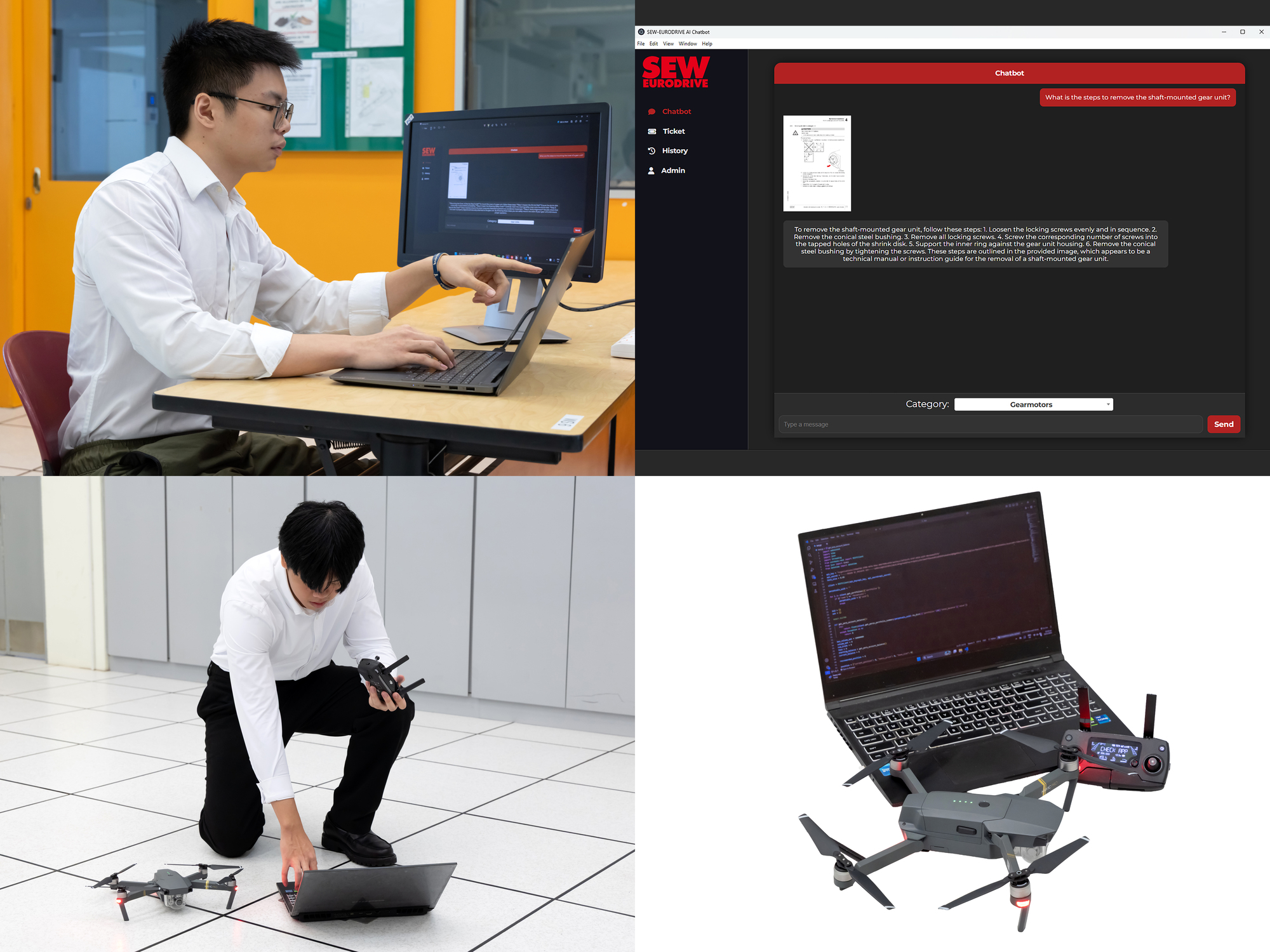
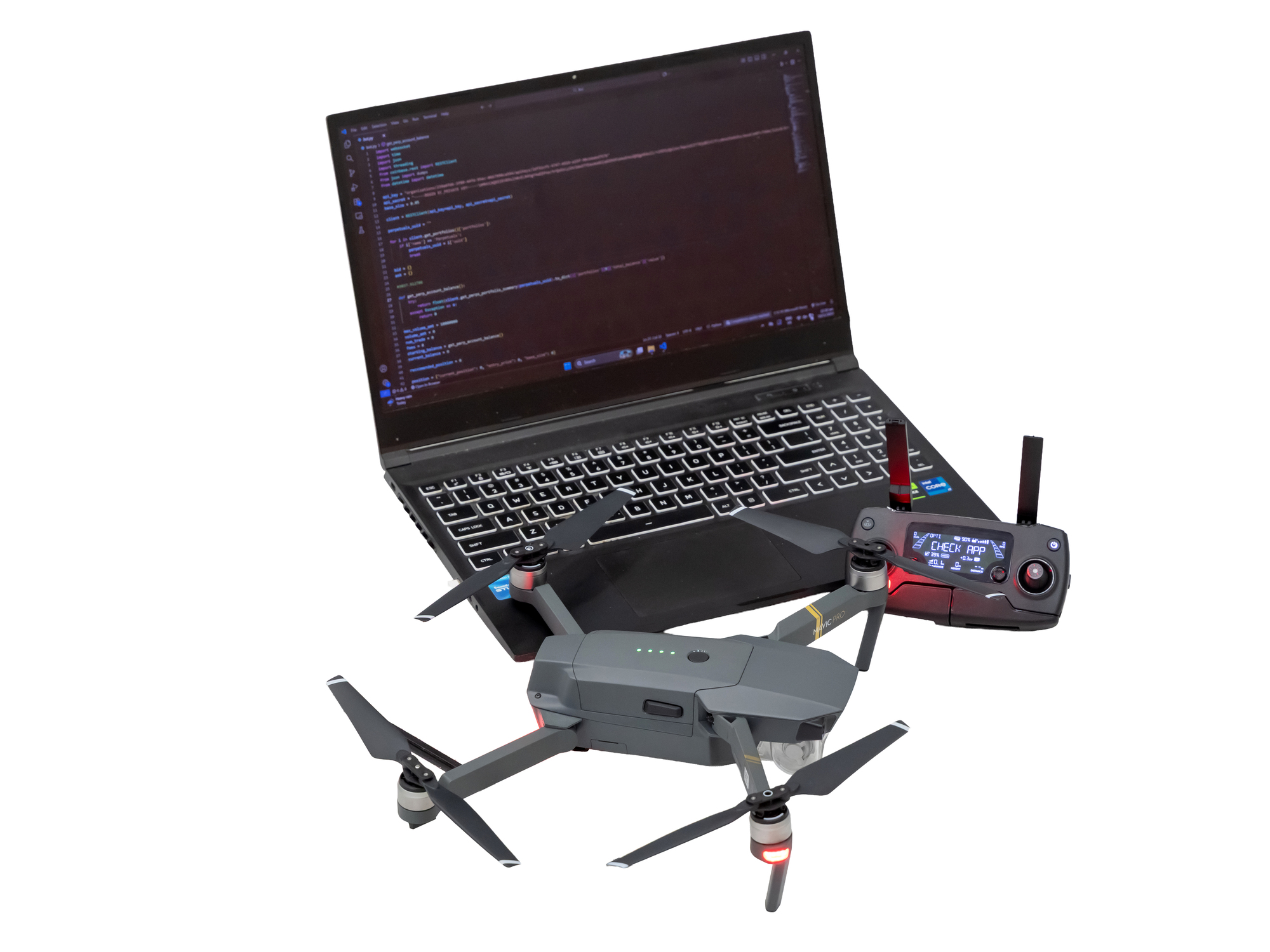
Our AI ecosystem combines machine vision with generative AI for aviation safety and industrial operations. One AI inspects aircraft surfaces detecting cracks and defects, preventing failures. A generative AI chatbot generates instant answers from complex technical documents, eliminating manual searches and delivering unprecedented efficiency.
AI for operational excellence: defects detection and technical document searching.
Dual-powered intelligence for operational excellence.
INDUSTRY PARTNER: Acrats Asia Pte Ltd | Sew-Eurodrive Pte Ltd
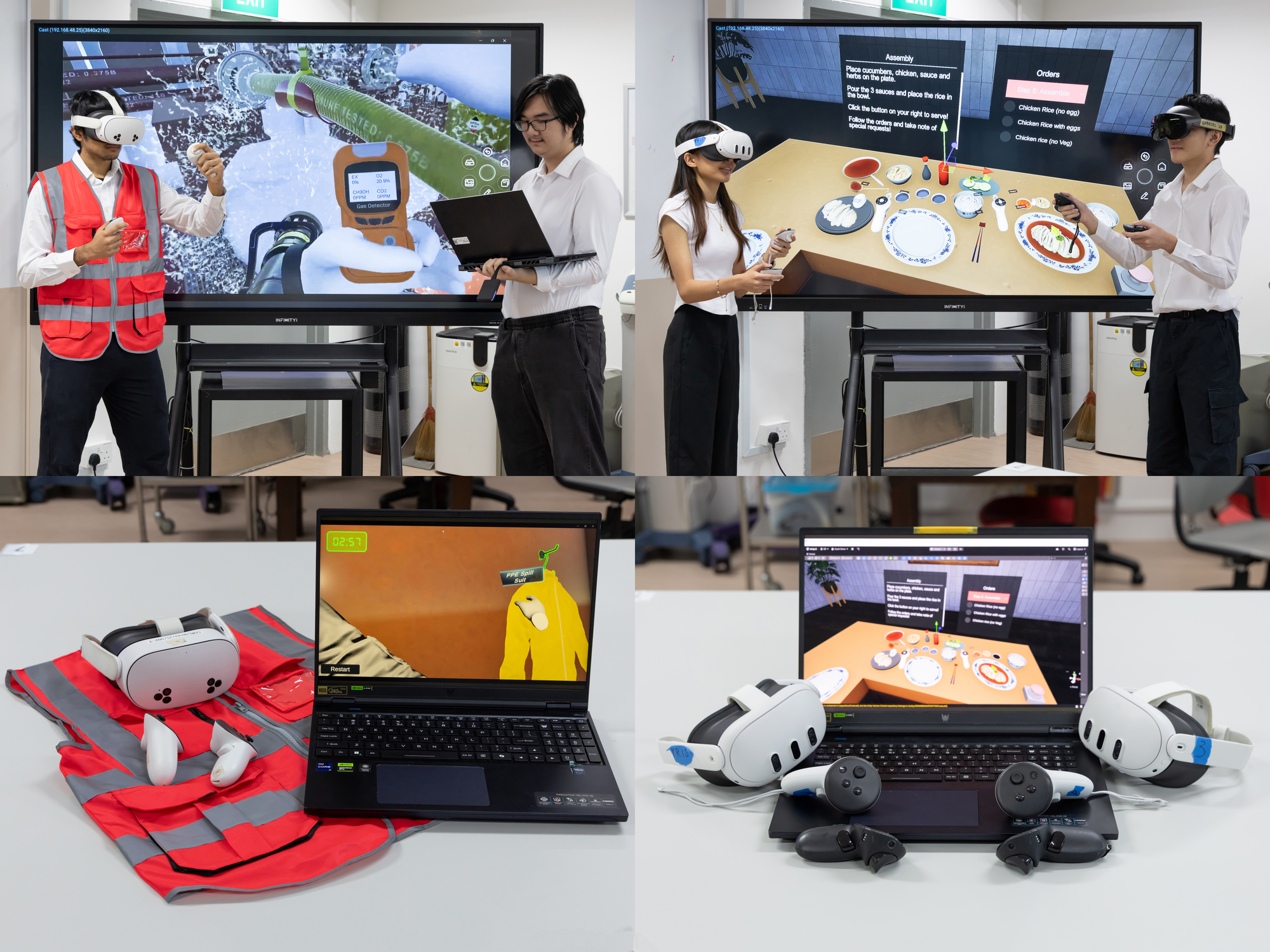
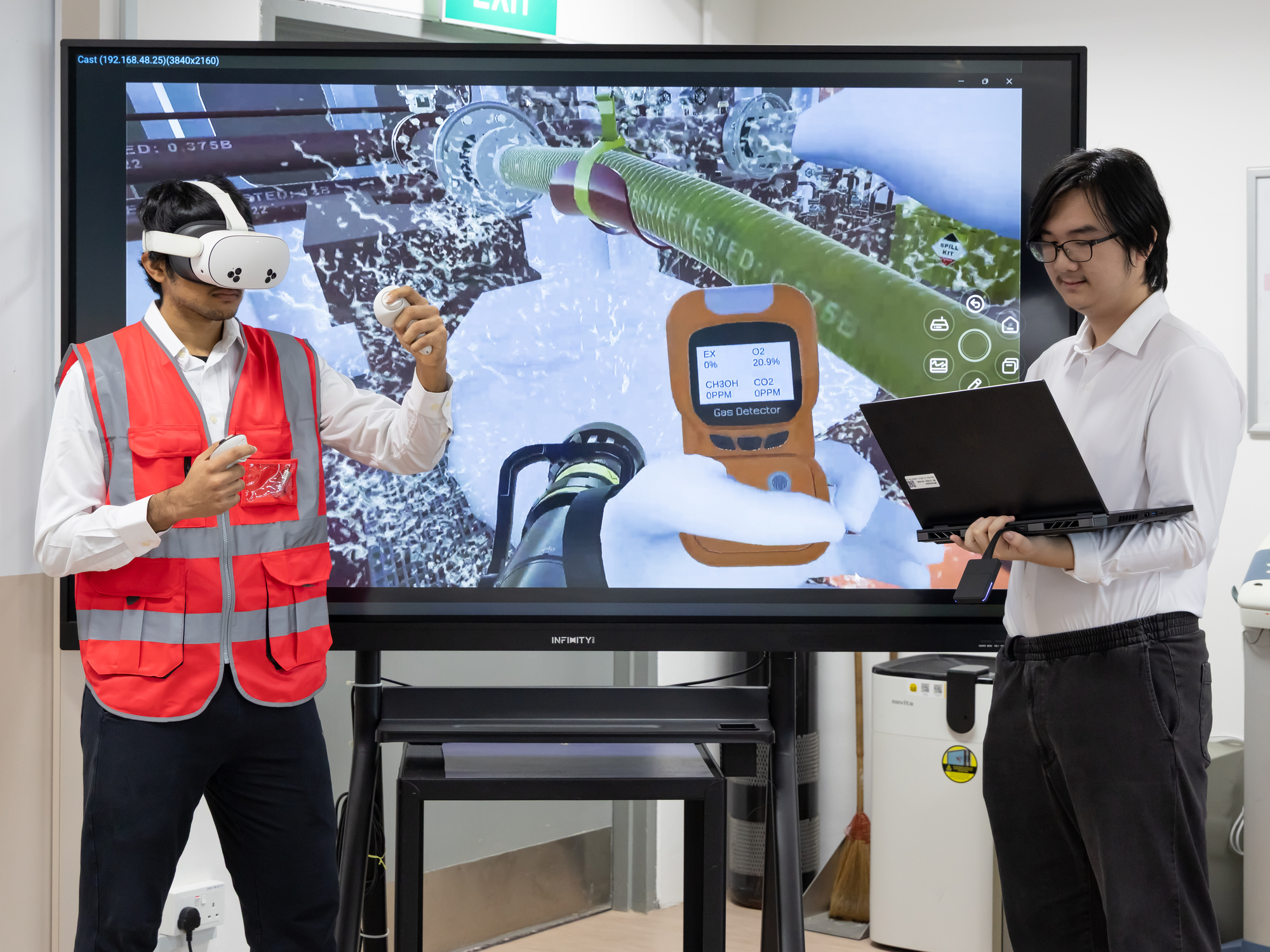
VR breaks new ground with two game-changing applications. Elderly stroke patients team up in virtual worlds, turning lonely rehabilitation into multiplayer adventures that rebuild motor skills and fight isolation—therapy they enjoy. Meanwhile, seafarers master handling highly flammable methanol fuel through immersive simulations, practicing challenging scenarios effectively and safely. With methanol ships scarce and traditional therapy often isolating, these VR breakthroughs create risk-free training environments where mistakes teach instead of harm. From hospital wards to shipping decks, virtual reality proves it's not just entertainment—it's revolutionizing how we learn life-critical skills.
VR solutions transform healthcare and maritime.
Students showcasing VR methanol firefighting training for maritime vessels.
TEAM MEMBERS: Htin Aung Thant | Khant Si Thu | Li Qirui | Nahilus Ng Ding Xuan | Neziah Devasittham Theodore | Priscilla Loi Hui Ying | See Kai Bin Raiden | Sidheshwarr | Toh Jun Xiang
INDUSTRY PARTNERS: Centre of Excellence for Maritime Safety | Lions Befriender
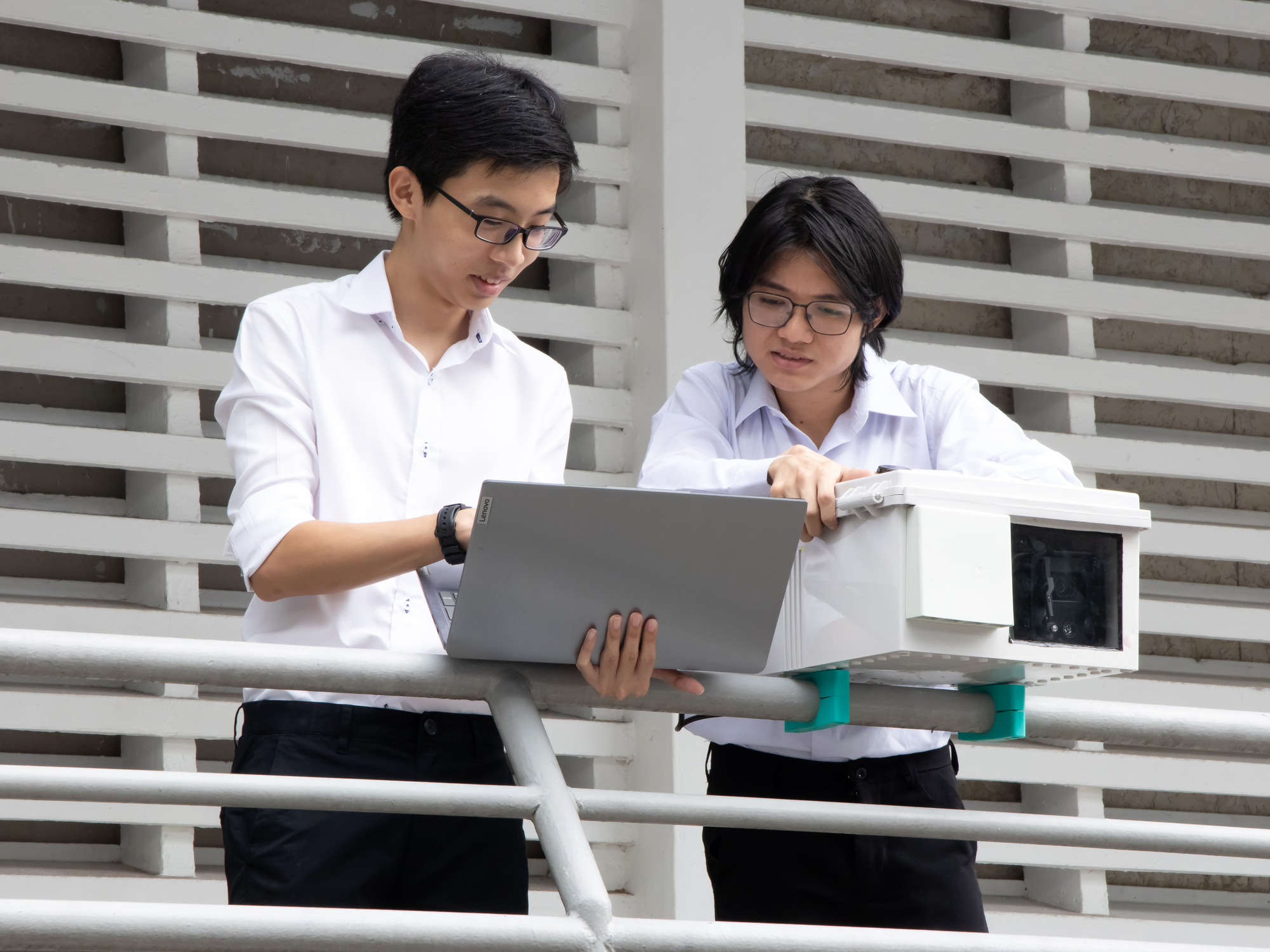
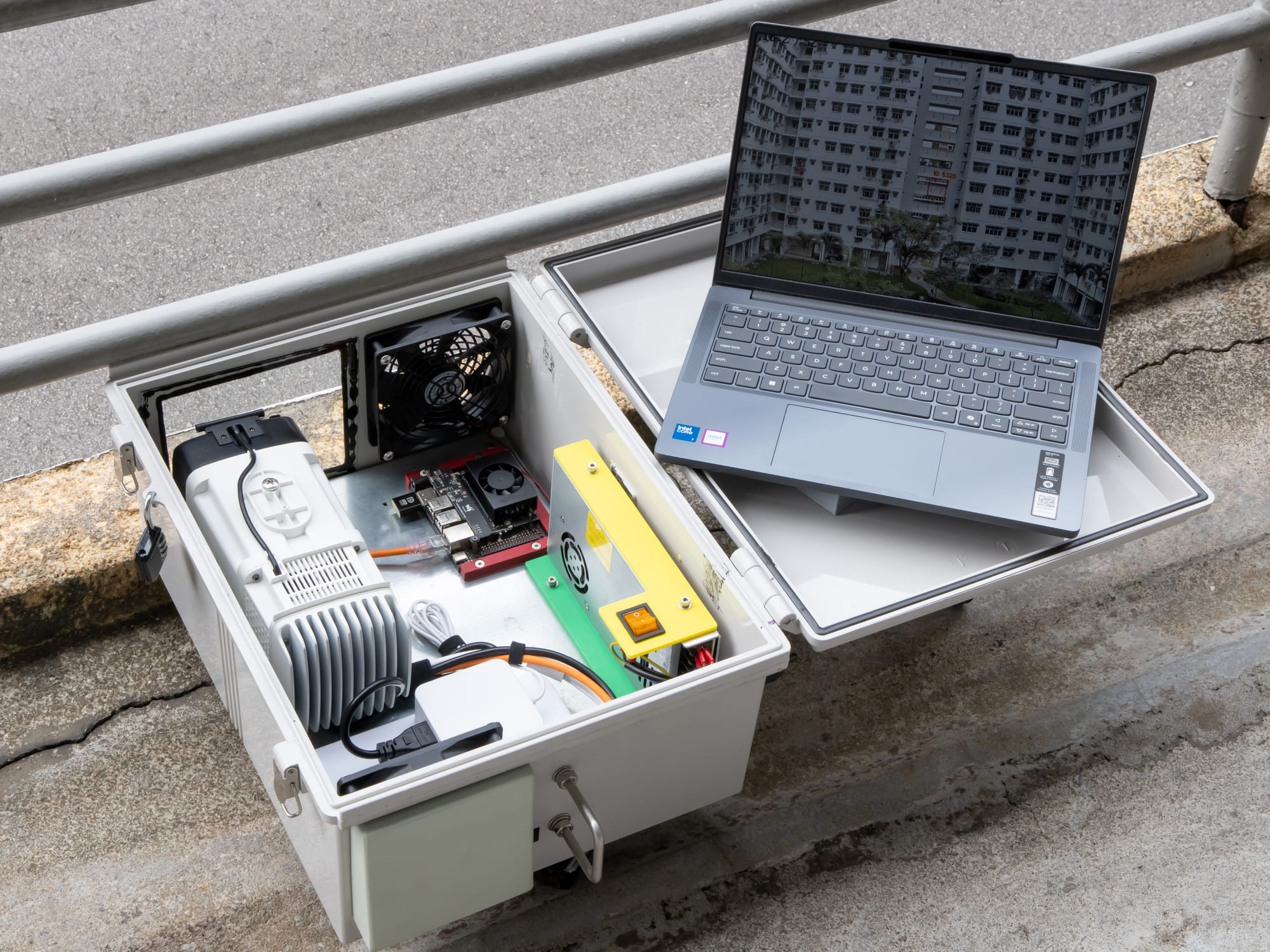
This project aims to design and develop a vision system, consisting of the following.
1) A computing unit, a camera, energy storage, wireless communication into a waterproof housing unit (Primary Unit) with sufficient cooling for the internal components.
2) A Primary Unit which must be able to be separated from the Secondary components.
3) A Secondary component which is mainly used when the box needs to be deployed on the ground floor.
4) A setup which needs to be self-powered with the capability to draw power from the grid if possible.
5) A primary system which needs to be able to attach itself to a surface without damaging a pillar or wall.
6) Machine Learning to detect and capture high-rise littering and smoking.
Testing of the AI-enabled Detection System to Capture High-rise Littering.
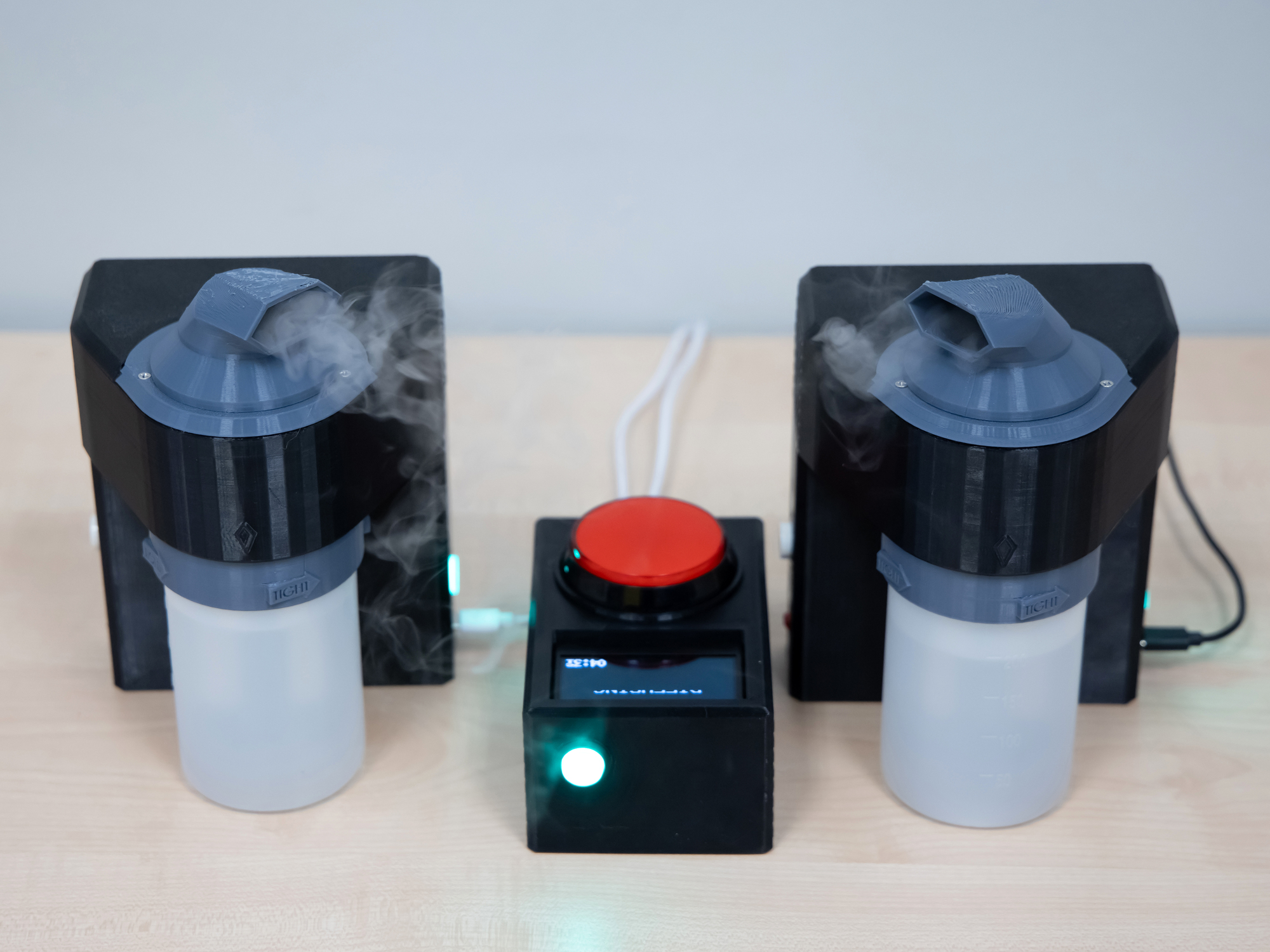
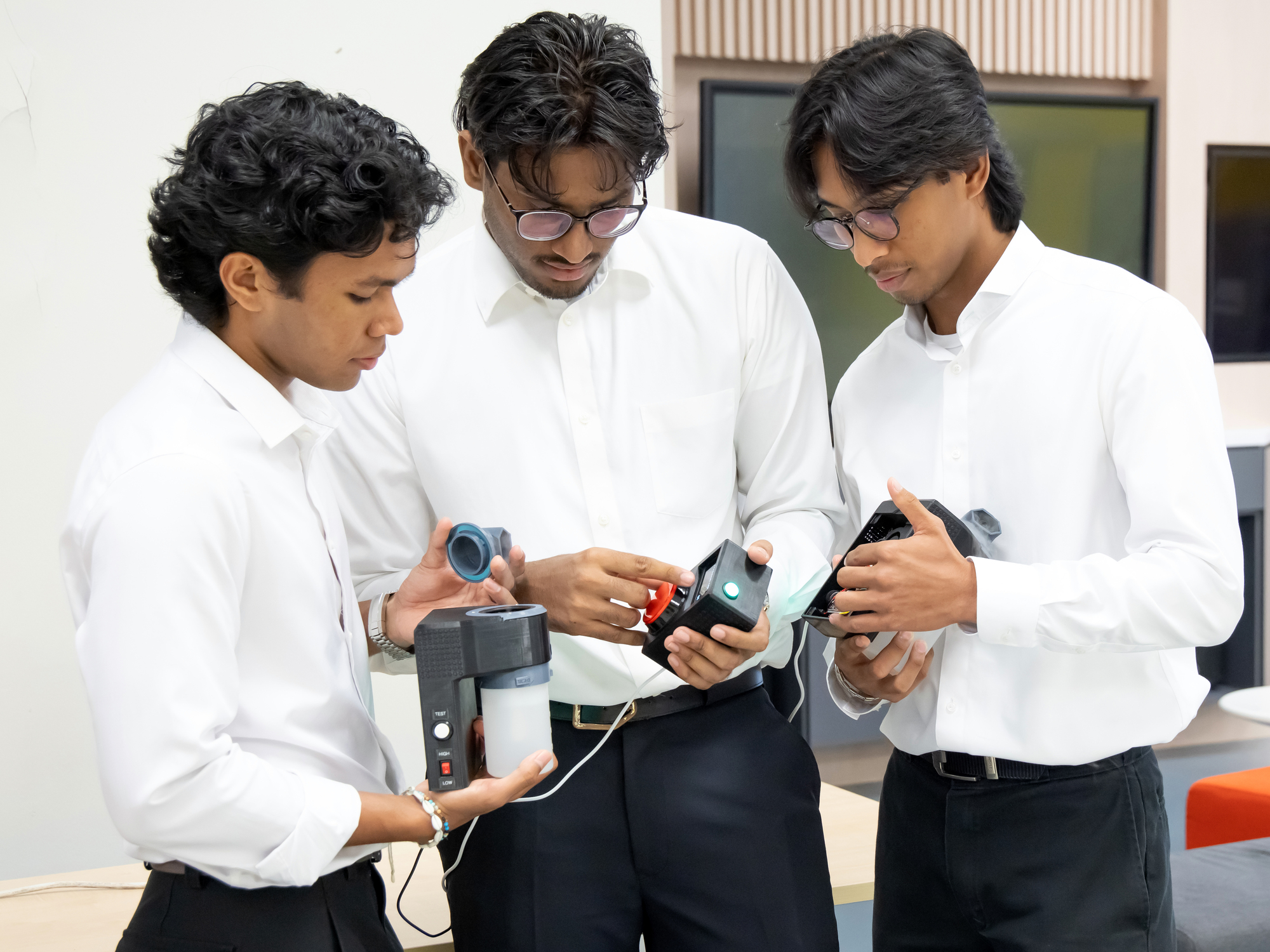
This project aims to design and build a wireless device that emits scent for a mock-up emergency escape scenario. The device can be triggered manually by an instructor or automatically by an event.
Wireless-controlled diffusers with simultaneous activation in action.
Diagnosis and testing of wireless diffuser systems.
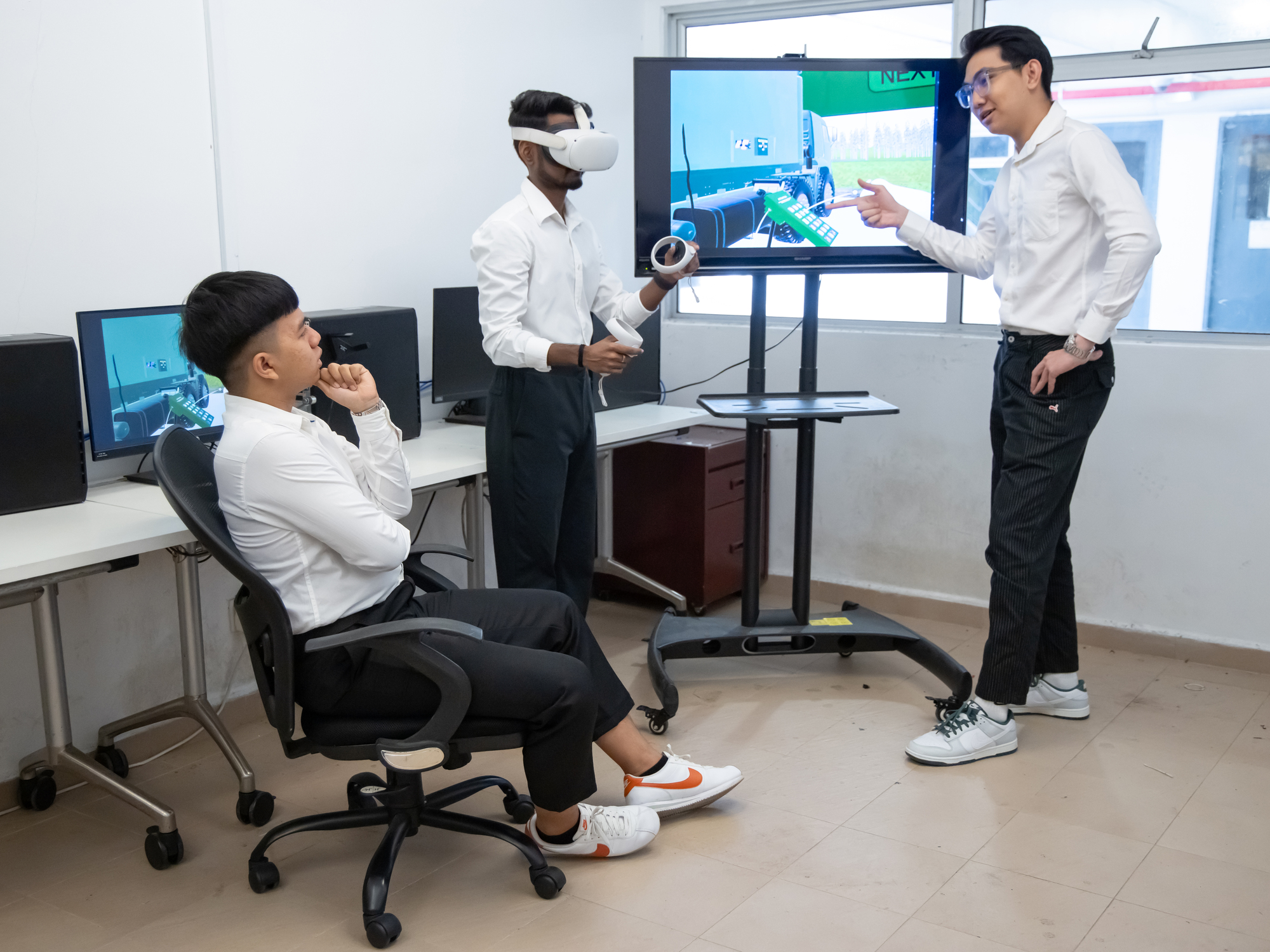
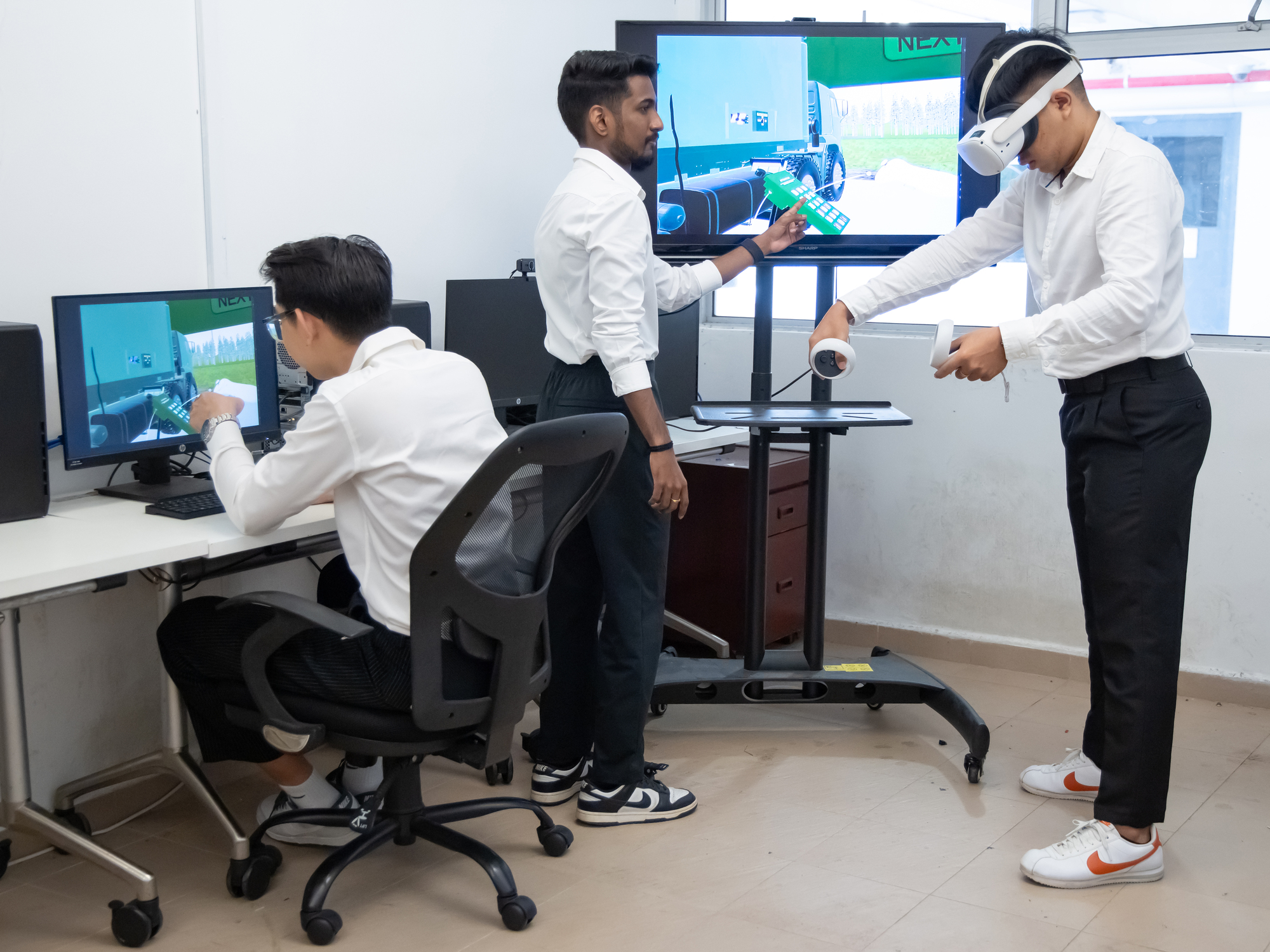
Singapore Polytechnic and the RSAF have teamed up to revolutionize radar training with an immersive VR solution for the Shikra system. Built using Blender and Unity, this cutting-edge platform delivers a safe, realistic environment where trainees can master complex operations without risking costly equipment damage. With guided learning and test modes, it accelerates skills development, reduces manpower needs, and minimizes errors—setting a new benchmark for next-generation defense training
<
Students discussing on how to improve the program.
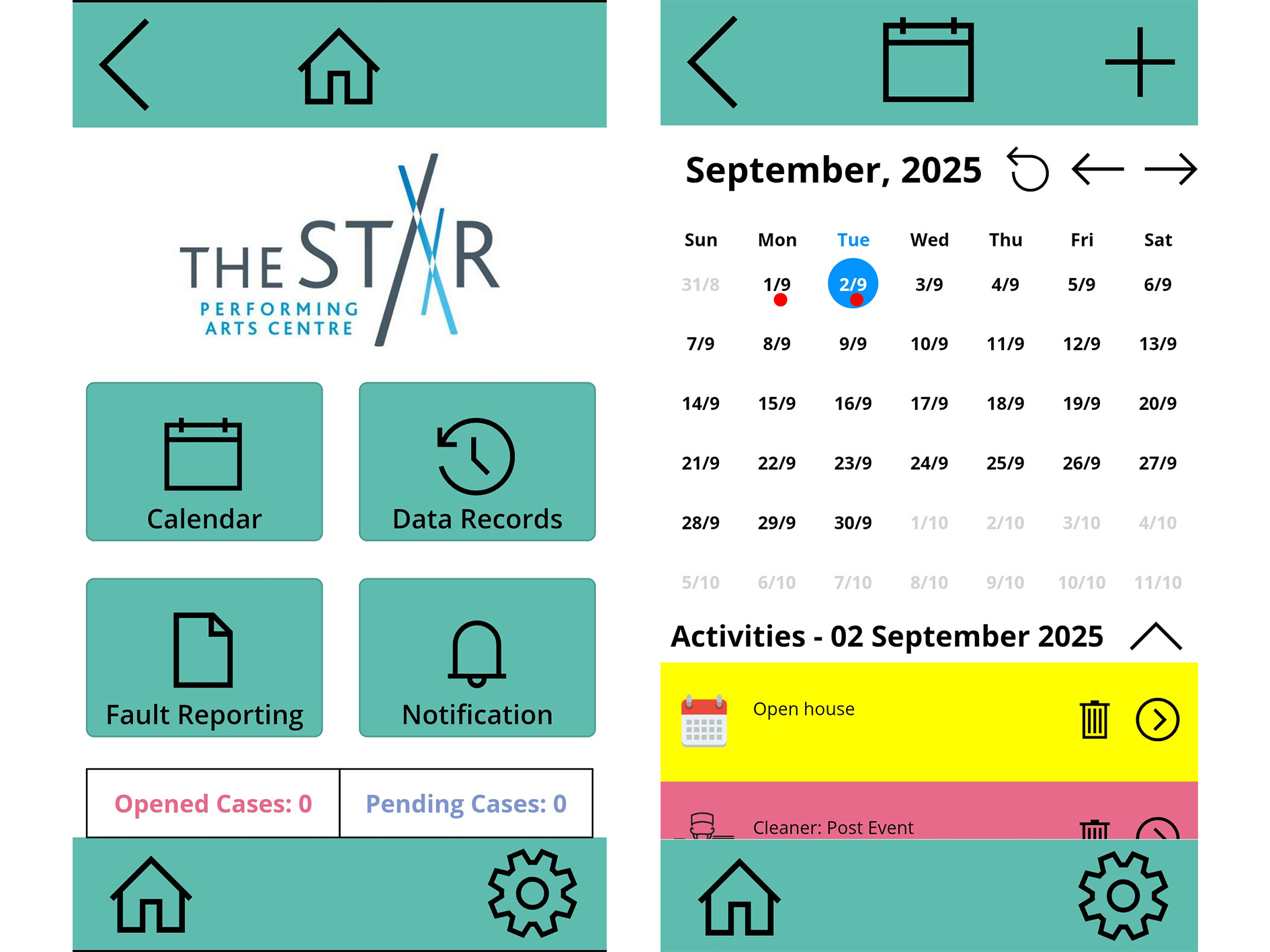
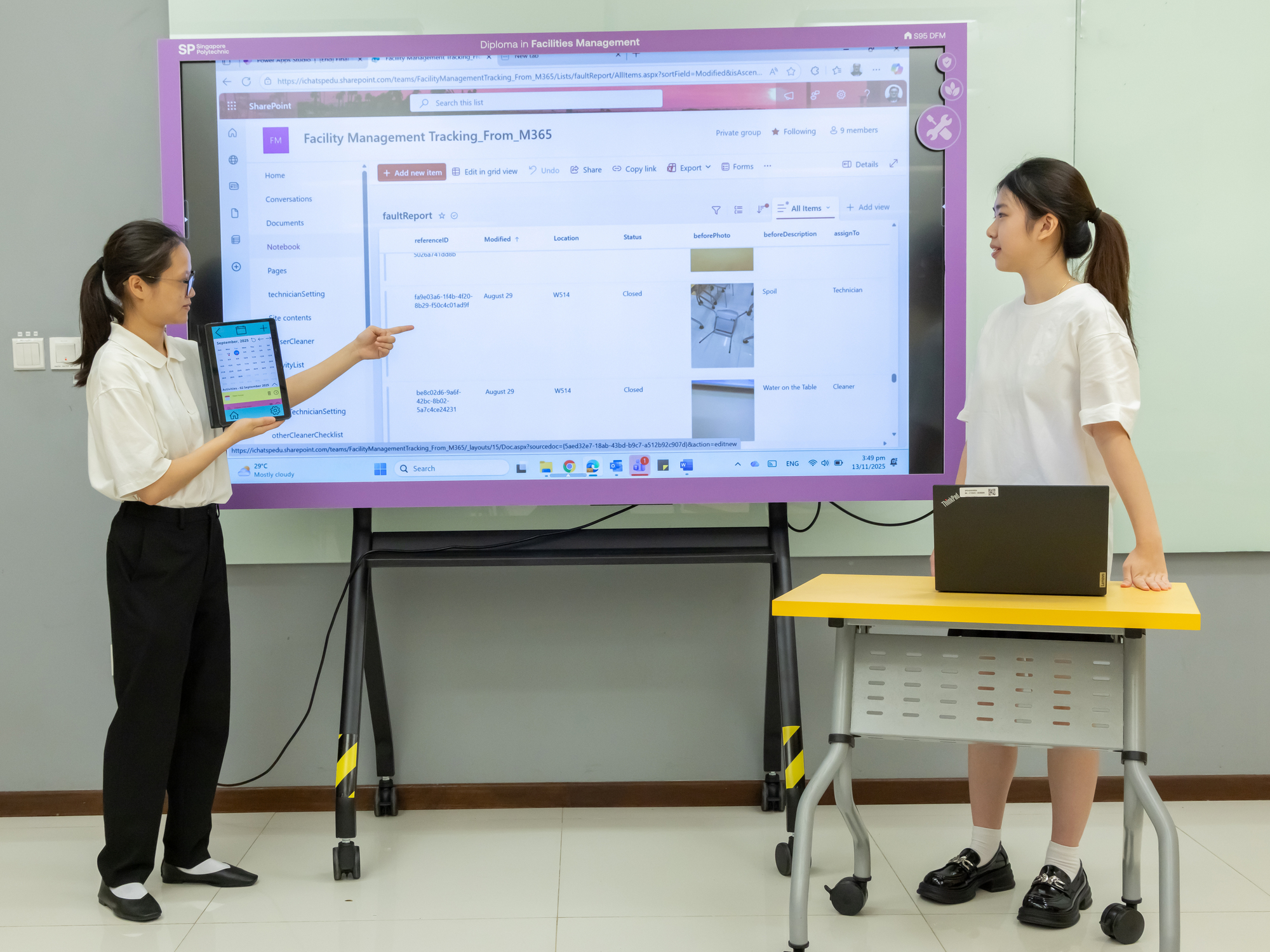
Facilities Management (FM) involves many tasks such as fault reporting, inspections and maintenance work that accumulate and become difficult to track. This project created a one-stop digital application to centralize FM processes, allowing real-time tracking of faults, inspection checklists and work status. The platform improves visibility, streamlines communication and boosts accountability. By converting scattered routines into structured data, it reduces manual effort, accelerates fault resolution and supports informed decision-making.
Screenshots of the App.
Students presenting how the app enables organised, data-driven decision-making.
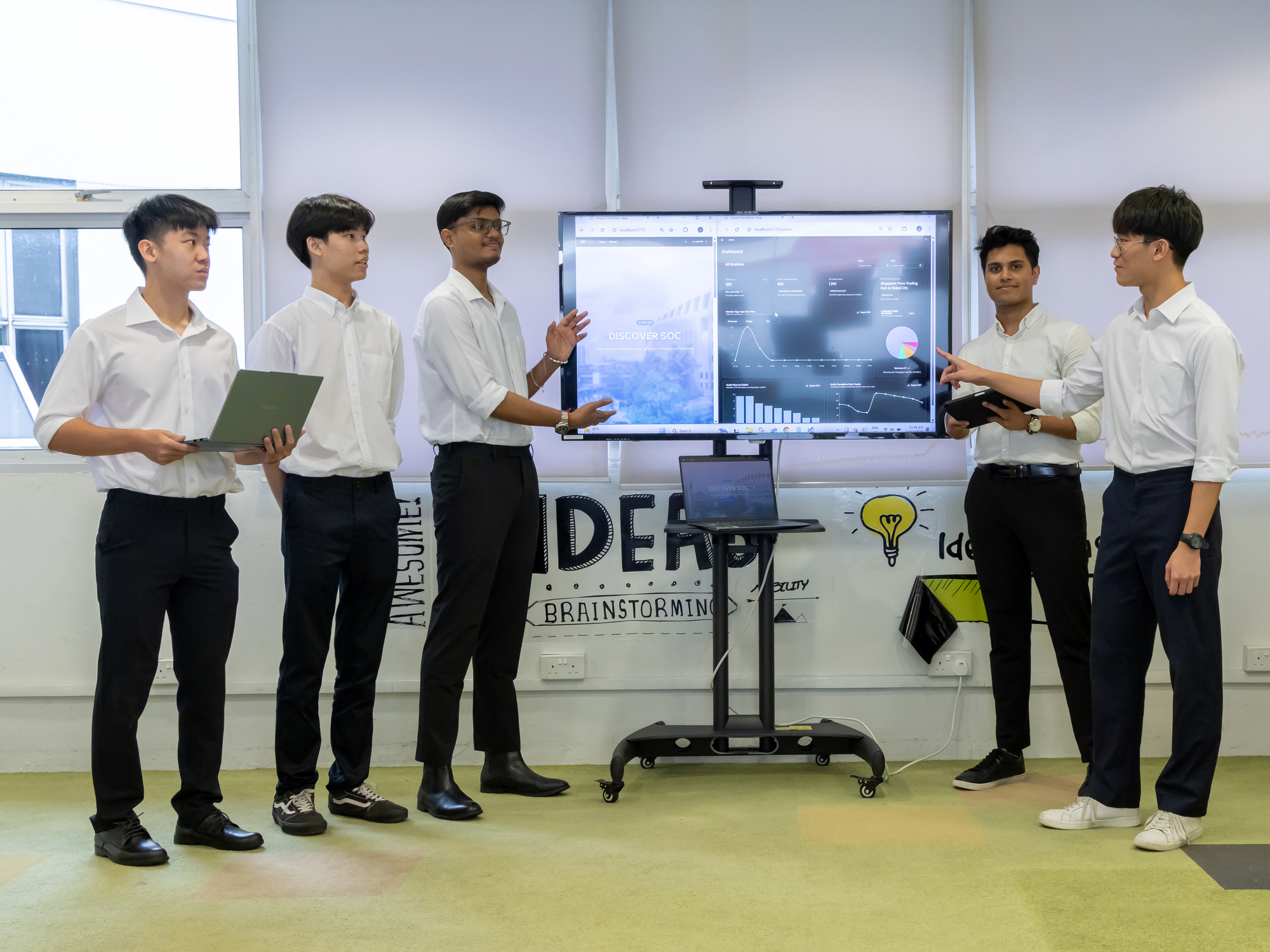
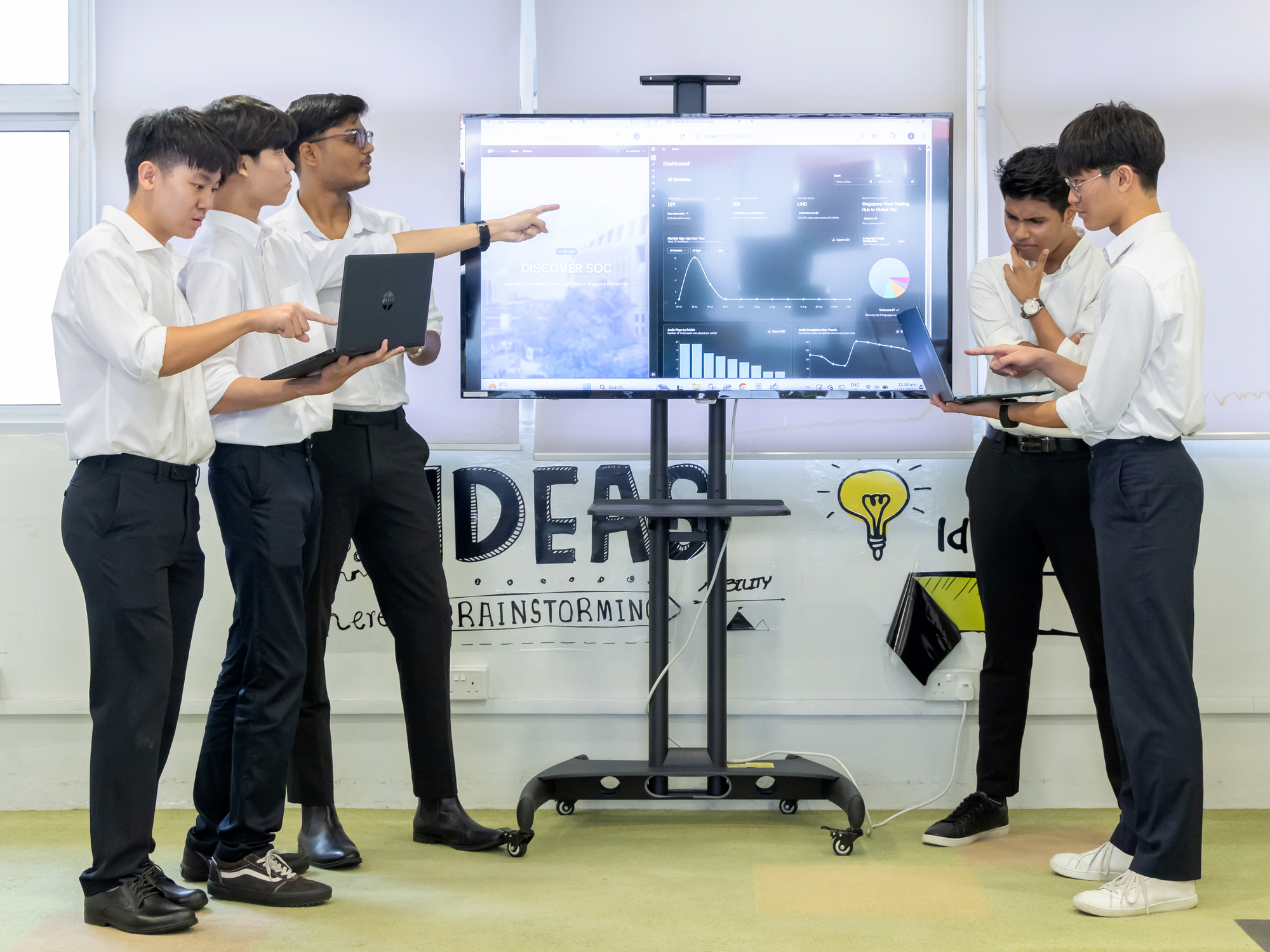
The Audio Guide System is a web-based application that enables administrators to create and manage exhibitions, such as the SOC Tour, by adding, editing, and organizing exhibits in a structured way.
Beyond content management, the app includes several interactive features to enhance the visitor experience:
- QR Code Generator and Scanner for instant access to exhibit details,
- Text-to-Speech to provide narrated descriptions of exhibits,
- Speech-to-Text to capture and process visitor input,
- AI Assistant (Omni) that supports administrators by retrieving and presenting relevant website data based on prompts.
This combination of tools not only streamlines exhibit management for administrators but also makes exhibitions more engaging and accessible for visitors.
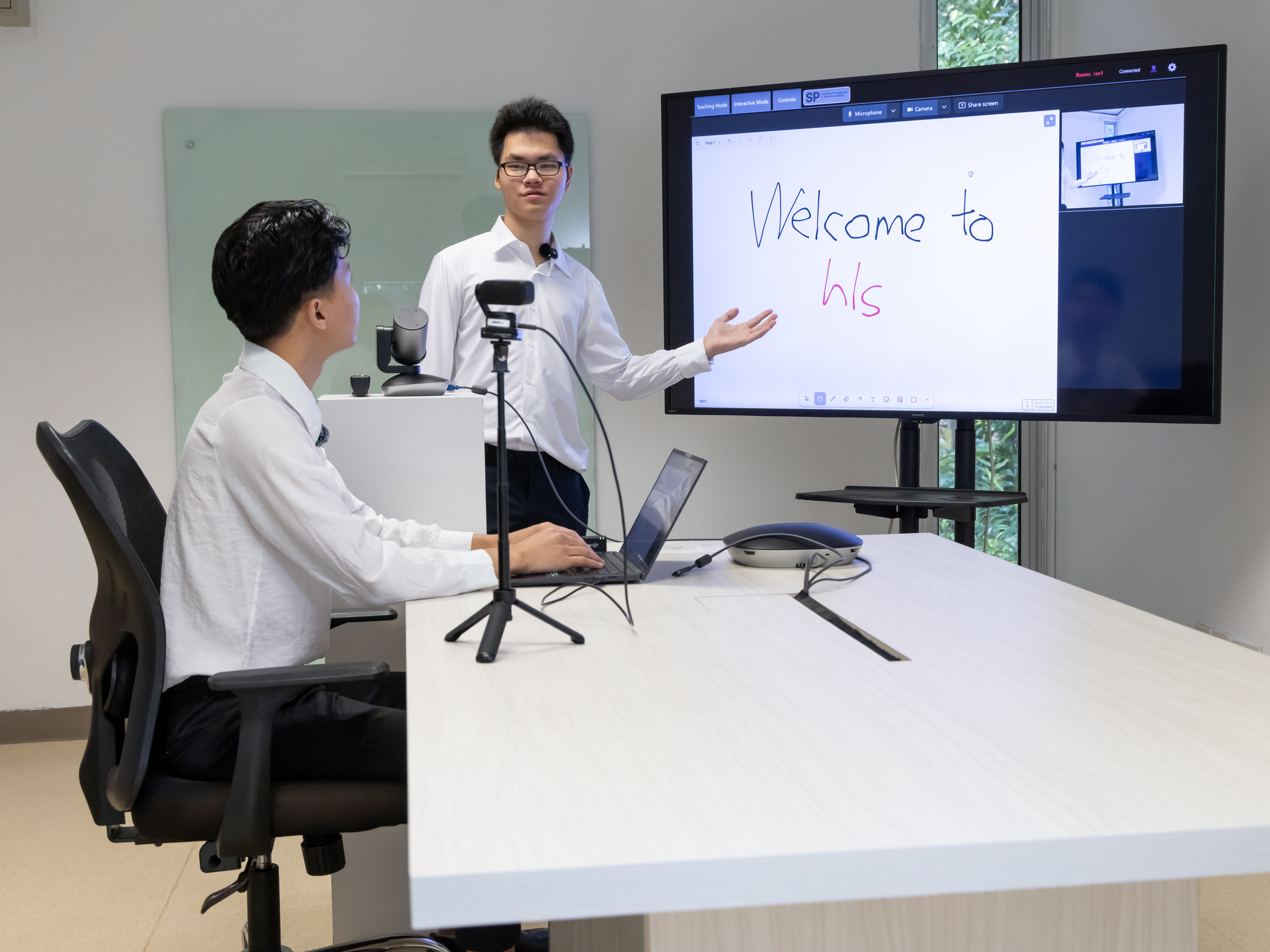
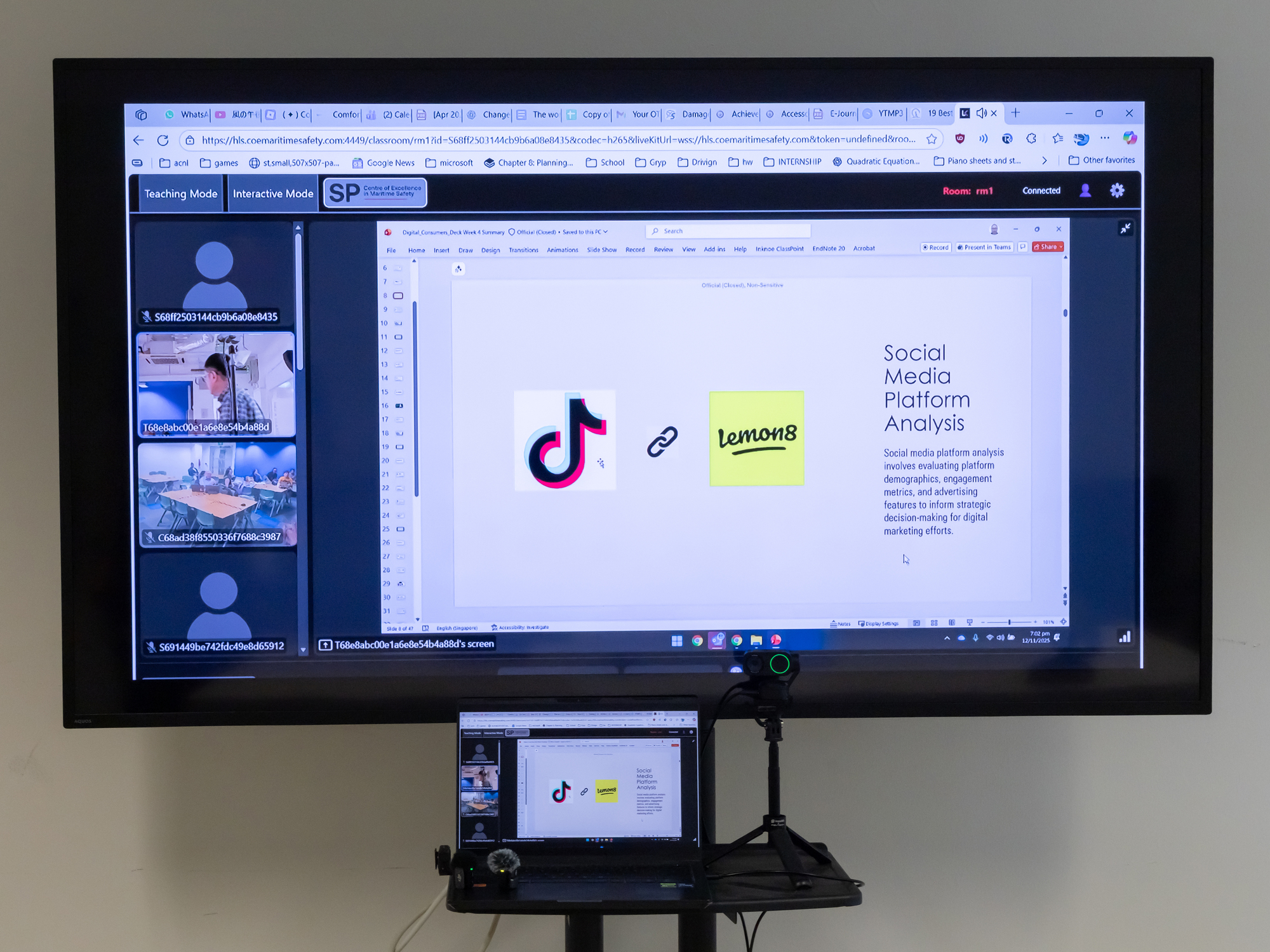
This project delivers a Hybrid Learning System designed for both CET and PET learners at SP. Unlike generic meeting tools, it is purpose-built for training with features that replicate the classroom experience, extending it to remote participants. An interactive digital whiteboard supports real-time collaboration among lecturers, onsite students, and remote students, with the option to download the shared board as a PDF. The system requires no software installation — lecturers and students can join the system simply by clicking a link — making access seamless and hassle-free. Together, these capabilities make the system a scalable, engaging platform for workforce training that balances flexibility with rich, interactive learning.
Demonstration of live whiteboard for note-taking.
Hybrid Learning Platform suitable for PET and CET learners
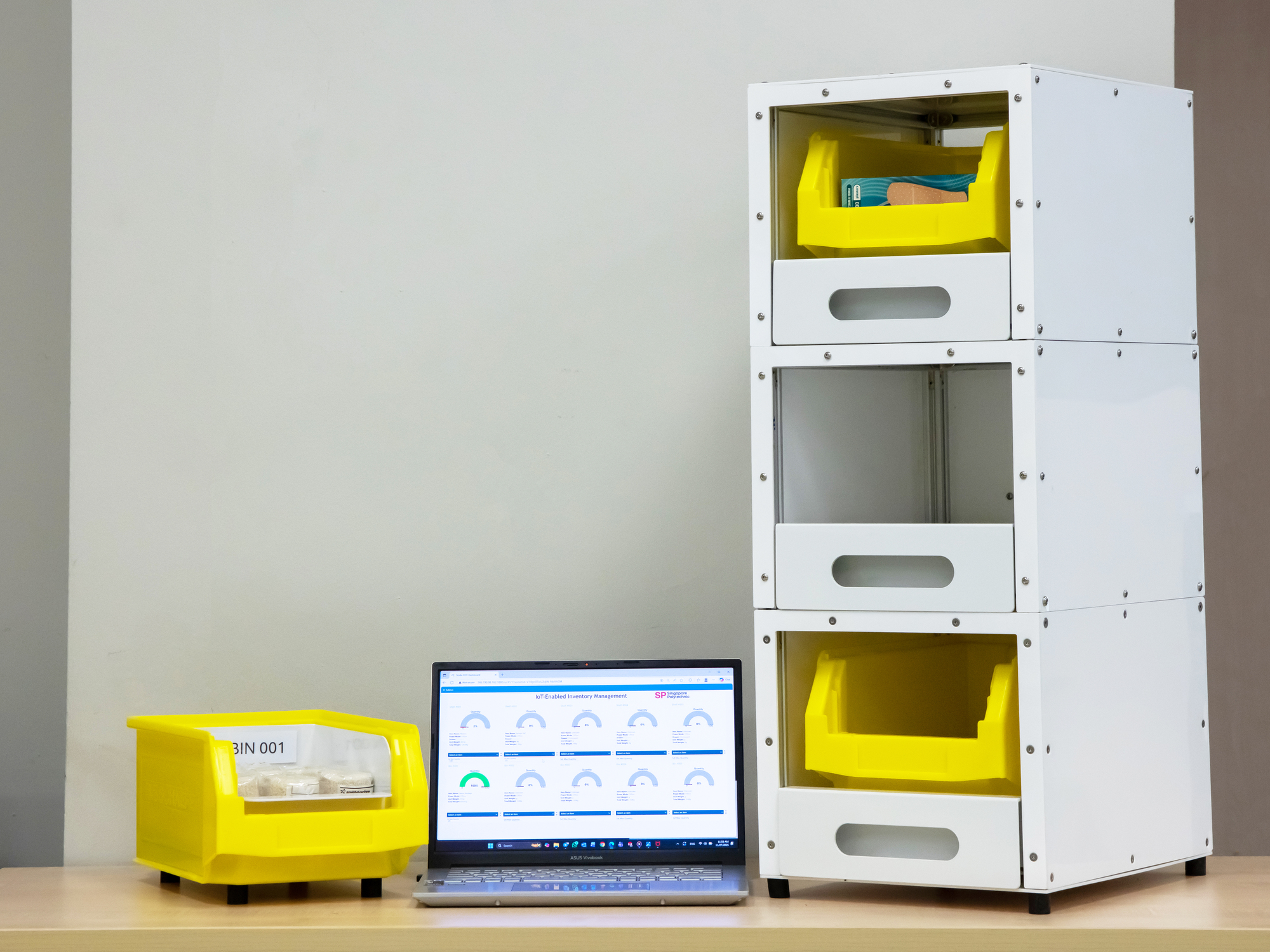
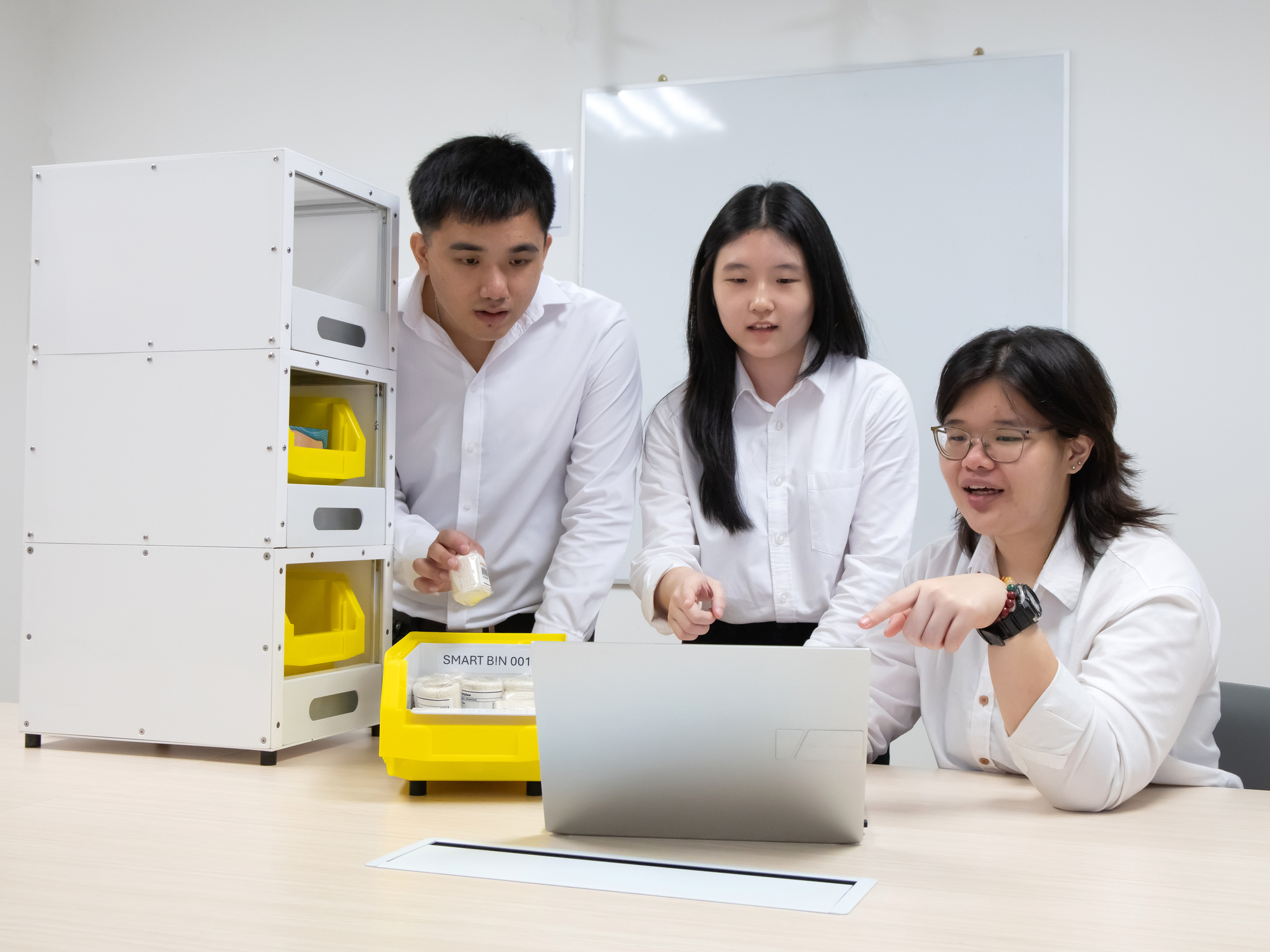
The main objective of the project is to design and build Smart Bins which are equipped with load cells, RFID and additional sensors to track the items inside the bin. A server database for the Storage Shelf will be developed to manage the bins inside the storage shelf. Students will be conducting the prototyping, and testing and validating the results with a company.
Complete setup of Smart Bin and Smart Shelf with IoT Dashboard
Testing the setup and validating the output results
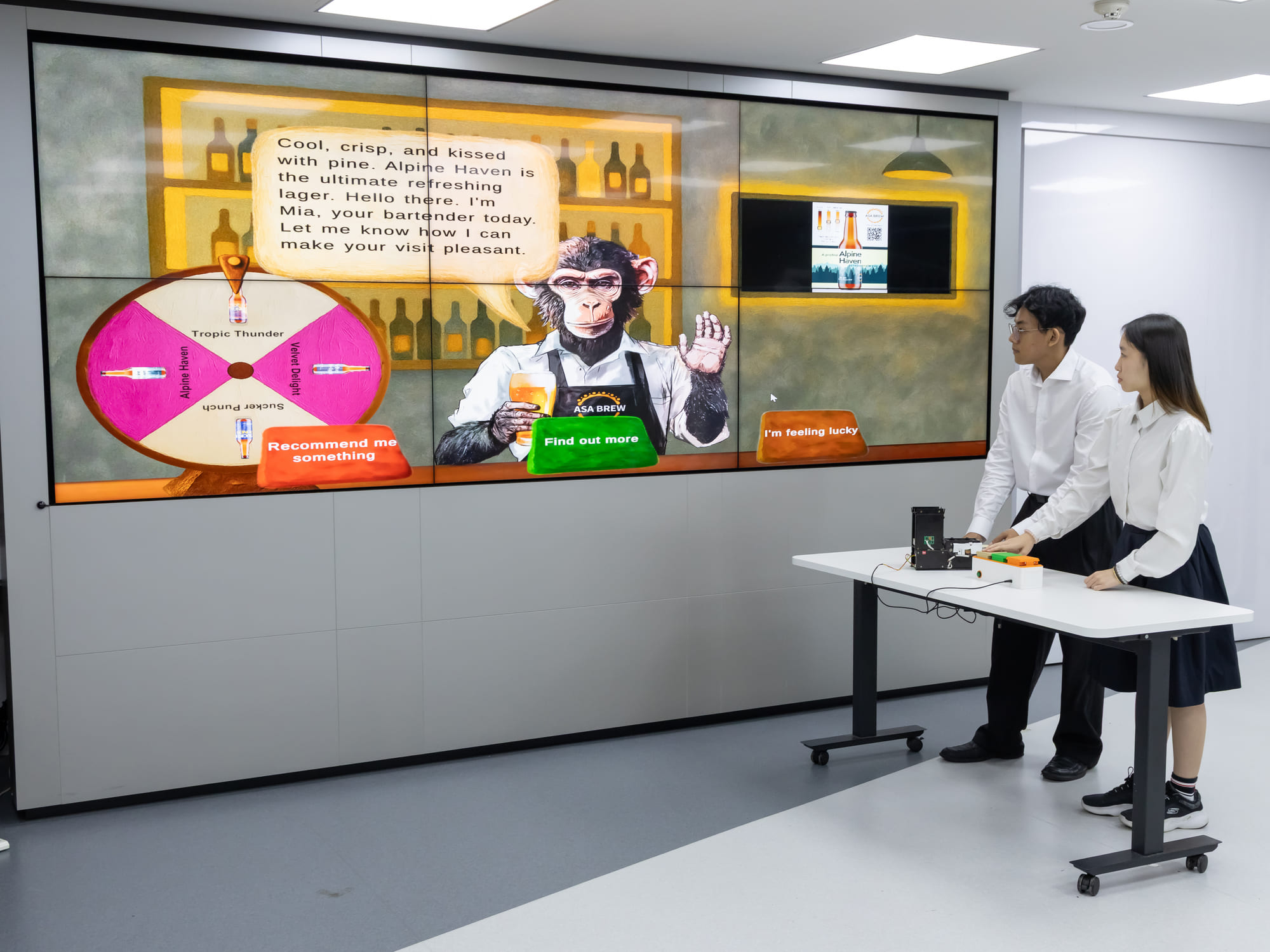
The Smart Beverage Recommender Virtual Assistant is an AI-driven platform designed to provide personalized beverage recommendations and enhance user experience through interactive features. By leveraging demographic data, user preferences, and contextual interactions, the virtual assistant offers tailored suggestions that cater to each individual’s needs.
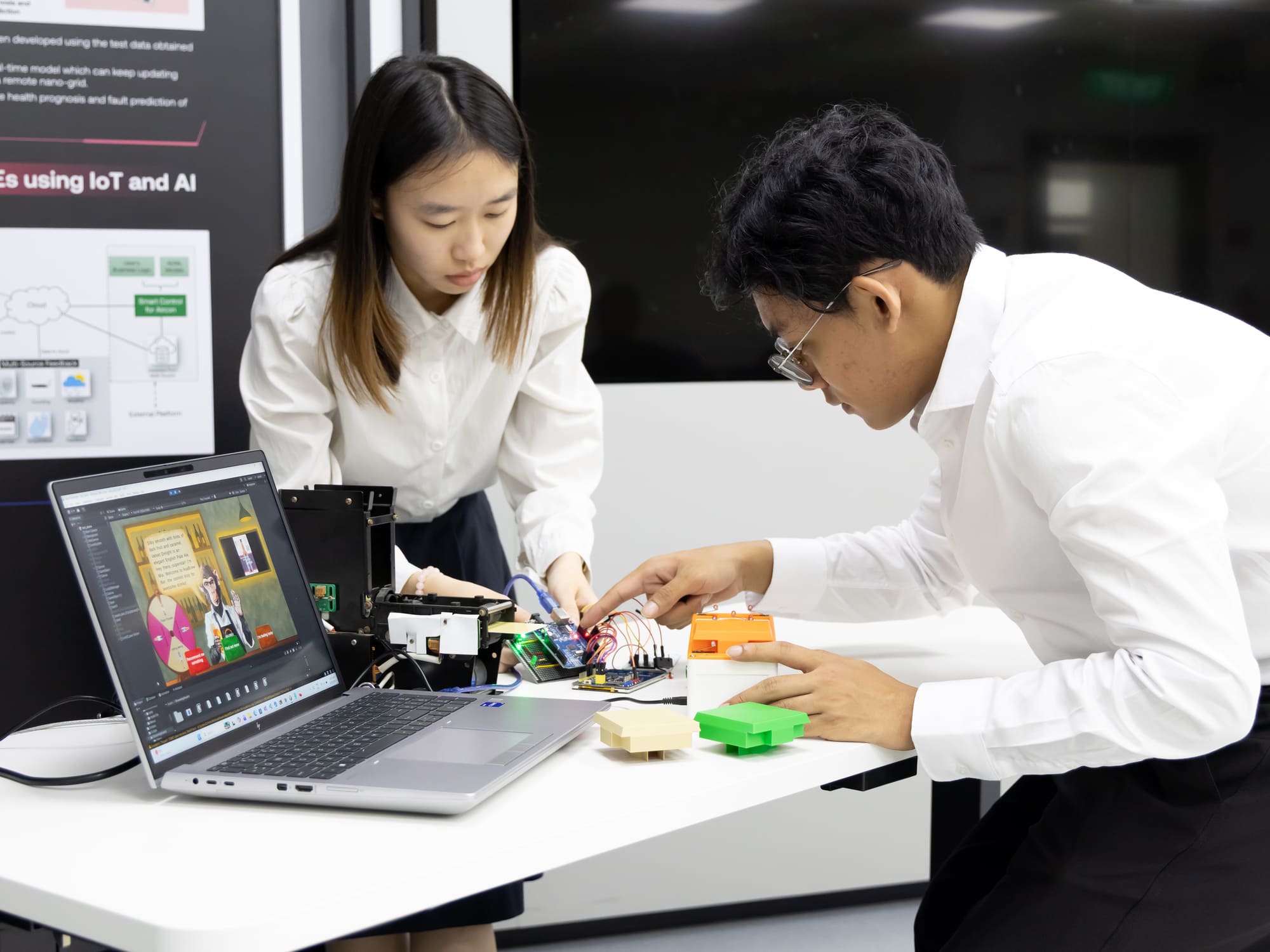
In addition to personalized recommendations, the system also supports real-time advertising and promotion features, making it ideal for exhibition settings and brand engagement. Connected to a card dispenser, the assistant enables customers to receive promotional tasting cards and interact with a virtual avatar, creating an immersive and dynamic experience that encourages deeper engagement with the brand.
Discover our Smart AI Advertiser Beverage Dispenser, technology meet creativity
From classroom to industry, students bring the Smart AI Advertiser to action.
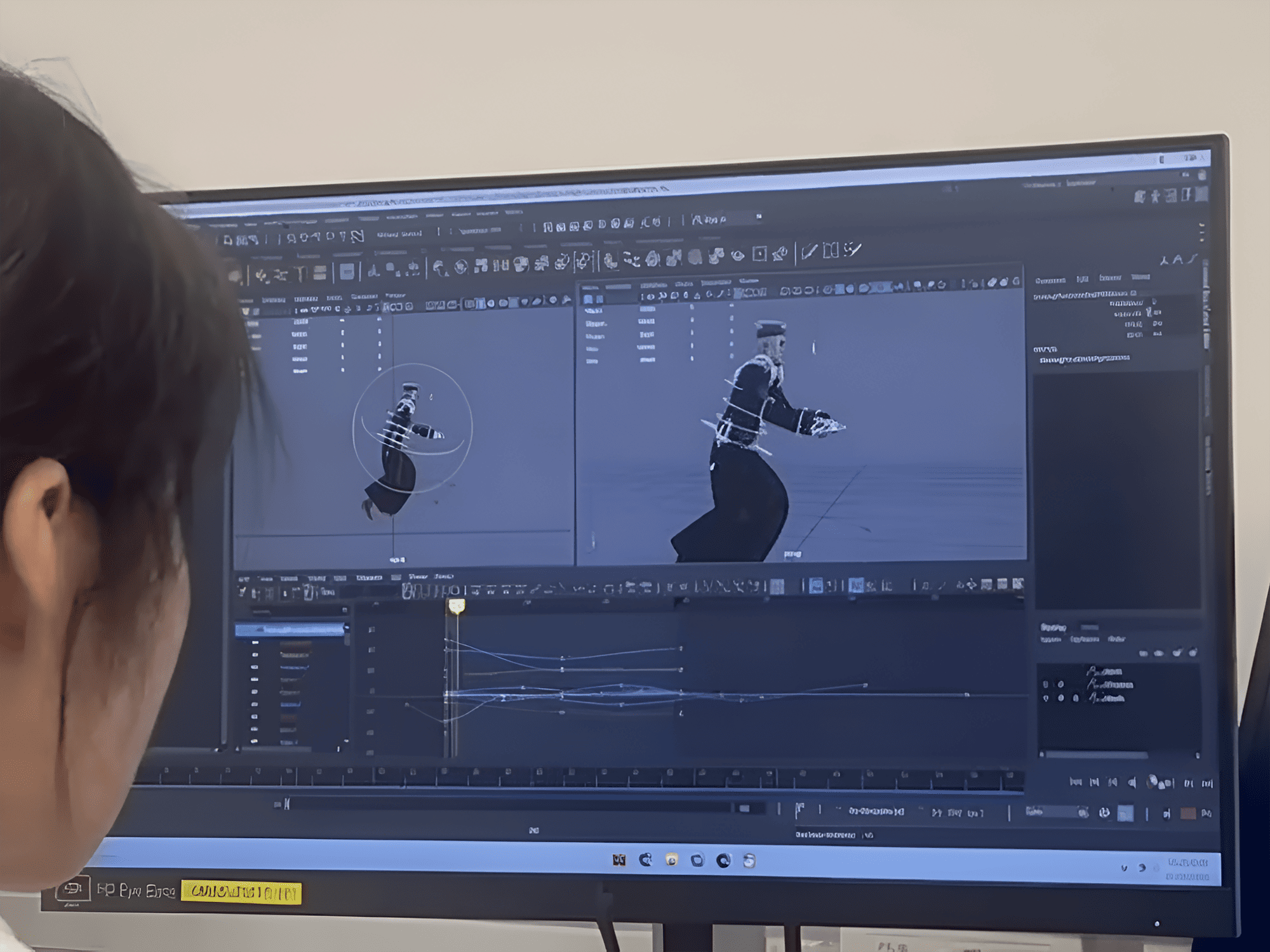
In collaboration with SoDrama! Entertainment, this project presents a Location-Based Entertainment (LBE) VR horror escape room rooted in the haunting world of Peranakan culture. Unlike home-based VR, LBE transforms real spaces into immersive, shared experiences where reality and illusion merge. Participants step into an unfolding story inspired by the eerie Chinese ghost wedding—a forbidden ritual binding the living to the dead. In teams of four, players navigate ornate chambers and uncover the fate of Yu Niang, a doomed bride trapped between worlds. Blending horror, heritage, and interactive storytelling, players must free her before the final vow is sealed.
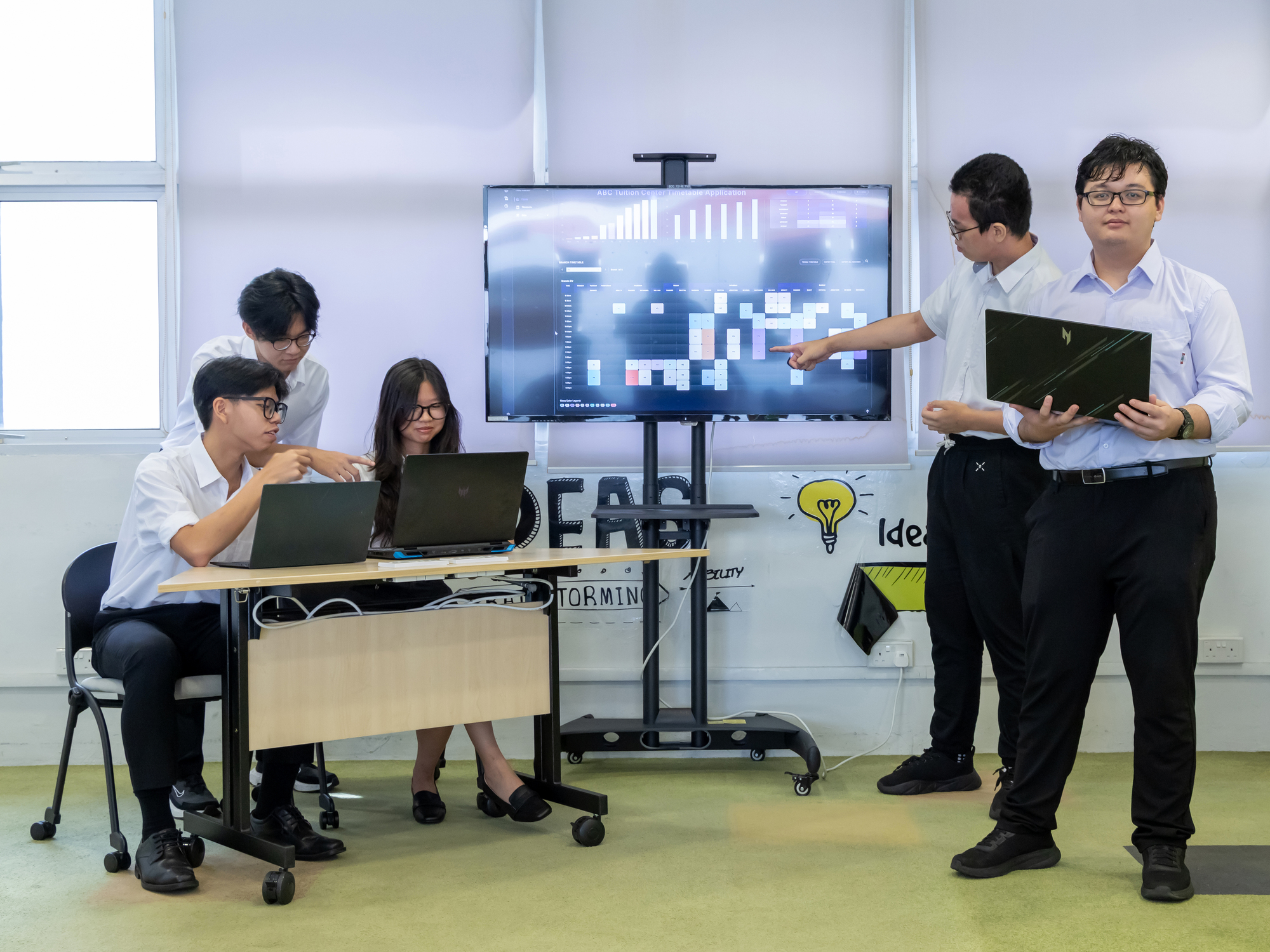
This Python-based application optimizes tutor allocation across multiple branches by considering student count, tutor qualifications, availability, and facility capacity. It ensures efficient scheduling, maintaining optimal class sizes and providing alerts when adjustments are needed.
Key Features:
-Tutor Allocation & Class Optimization: Automatically assigns tutors based on availability and class size needs.
-Operational Dashboards: Interactive KPIs and real-time data, with the ability to update constraints for quick re-scheduling.
-Workload Analytics: Visualizes tutor workloads and class distributions.
-Timetable Export: Exports schedules to Excel for distribution.
The system uses a Greedy Heuristic algorithm for balanced, feasible scheduling.